

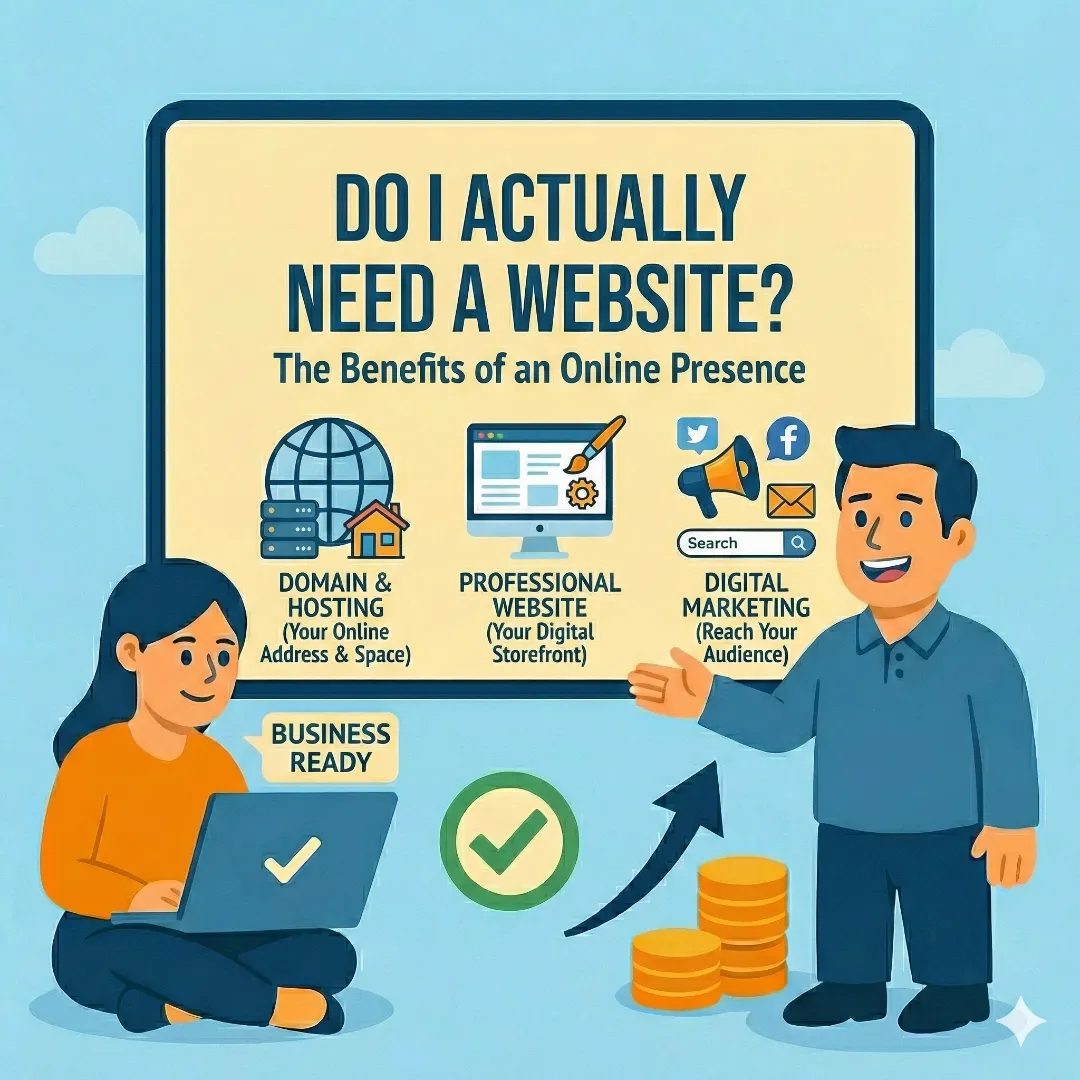
We hear this all the time:
"I get all my business from referrals. I don't need a website."
"I have a Facebook page. That's basically the same thing."
"My business is too small for a website."
We get why people think this. Building a website feels expensive, complicated, and unnecessary when business is already coming in. But here's what these arguments miss: a website isn't about replacing what's already working. It's about capturing the business you don't know you're losing.
The Referral Problem
Referrals are great. They're also a terrible growth strategy as your only channel.
When someone gets your name from a friend, the first thing they do is Google you. That's not an assumption — research consistently shows that the vast majority of consumers look up a business online before making contact, even after a personal recommendation.
If they Google your business and find nothing — no website, no Google Business Profile, just maybe a sparse Facebook page — a percentage of those people never call you. They don't tell the person who referred them. They just quietly move on to someone who looked more established online. You never know it happened.
Why Facebook Isn't a Website
Facebook is a social media platform, not a business platform. Here's why it's not a substitute for a website:
You don't own it
Facebook can change its algorithm, restrict your reach, or even disable your page at any time. It's happened to businesses with zero warning. Your website is yours.
It's not indexed like a website
When someone searches "plumber in Prior Lake," Google isn't sending them to Facebook pages. It's showing websites and Google Business Profiles. Facebook's organic reach in search is minimal.
Credibility gap
A Facebook-only business reads as a side hustle, whether that's fair or not. A professional website reads as an established business. When you're competing for a job against someone with a real site, the perception gap matters.
Limited functionality
You can't control SEO, create service-specific landing pages, collect leads through custom forms, or present your work the way you want. You're constrained by Facebook's layout and features.
Not everyone uses Facebook
Younger demographics have increasingly moved away from Facebook. If a potential customer doesn't have an account, they may not even be able to see your page's content.
"My Business Is Too Small for a Website"
No, it's not. If you're small enough that you don't need a complex website, you're small enough that a simple one is easy and affordable.
A basic 3–5 page website that says who you are, what you do, where you do it, and how to contact you is sufficient for most small businesses. It doesn't need to be fancy. It needs to exist.
And here's something most agencies won't tell you: if your business doesn't need an online store or complex backend functionality, you probably don't need WordPress at all. A static site built with a modern framework like AstroJS is dramatically faster, more secure, and far cheaper to host than a WordPress site — with none of the plugin updates, security patches, or database maintenance. For most small businesses, it's the smarter choice.
What a Website Actually Costs
What a Website Does That Nothing Else Can
It Works While You Sleep
Your website is available 24/7. A customer who Googles you at 10 PM on a Sunday can see your services, check your reviews, look at your work, and submit an inquiry — all without you lifting a finger.
It Gives You Control Over Your Narrative
On your website, you decide what people see first. You control the messaging, the photos, the layout, and the customer journey. On social media, you're competing with ads, notifications, and whatever else Facebook decides to put in front of your visitors.
It Supports Every Other Marketing Channel
Running Google Ads? They need a landing page. Sending email campaigns? They need somewhere to link. Getting listed in directories? They all ask for a website URL. Everything points back to your website.
It Builds Compounding SEO Value
Every month your website exists, it builds authority with Google. Every page you publish, every review that links to you, every directory that lists your URL — it all compounds over time. Unlike paid advertising, organic search traffic doesn't stop when you stop paying.
But What Kind of Website Do I Need?
For most small businesses, the answer is simpler than you think:
Homepage
Who you are, what you do, where you do it, and a clear call to action
About Page
Your story, your team, real photos (not stock)
Services Page(s)
One page per major service, clearly described
Contact Page
Phone, email, form, hours, address
Optional
Testimonials/reviews page, project gallery, blog
That's it. You can always add more later. The important thing is having a professional, fast, mobile-friendly site that represents your business. Not having one is far more damaging than having a simple one.
Ready to Get Online?
Whether you're starting from scratch or upgrading from a Facebook page, we can help. Visser Analytics builds professional, fast, SEO-optimized websites for small businesses — and we manage them on an ongoing basis so you never have to worry about updates, security, or hosting.
Let's build something that works as hard as you do.